How to use technology for growth, agility, and security.
In 2026, small and midsize businesses need an IT strategy that does more than keep computers running. Technology now affects hiring, customer service, compliance, communication, reporting, security, and the ability to keep working during outages or disruptions.
This guide will help you craft a practical IT strategy for 2026. From cybersecurity and cloud storage to VoIP phone systems and business reporting, the goal is to turn technology into a reliable foundation for growth.
Why an IT Strategy Matters
IT is no longer just a cost center. A strong IT strategy helps businesses:
- Boost efficiency by automating work and integrating systems.
- Improve customer experience with faster, more reliable tools.
- Strengthen security against phishing, ransomware, and account compromise.
- Scale smoothly with systems that can grow with the business.
- Make better decisions using cleaner reporting and visibility.
The time to act is now. The best IT plans are not built around random upgrades. They are built around business goals, risks, budgets, and a clear implementation roadmap.
Pillars of an Effective IT Strategy
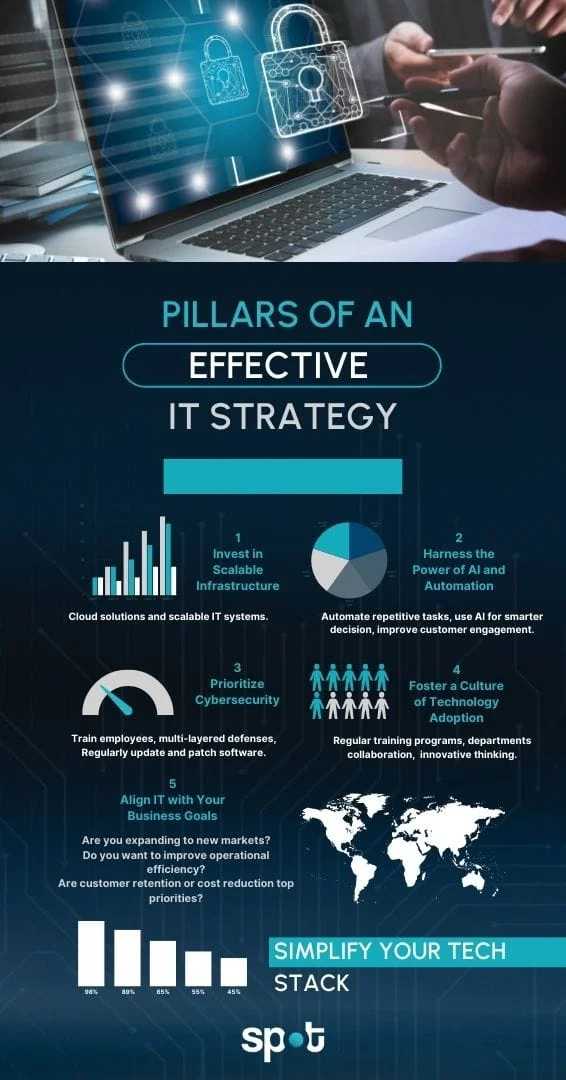
1. Align IT with Your Business Goals
Start with the outcomes you want. Are you expanding locations? Improving customer response time? Reducing downtime? Passing compliance reviews? Supporting remote users? Your IT roadmap should connect each investment to a measurable business need.
2. Simplify the Technology Stack
Many businesses lose time and money because their tools do not work well together. A cluttered tech stack can create duplicate subscriptions, inconsistent data, manual work, and support confusion. A 2026 IT strategy should identify what to keep, what to consolidate, and what to replace.
3. Prioritize Cybersecurity
Cybersecurity remains a top concern. Small businesses are frequent targets because attackers know many teams have limited internal IT resources. Your plan should include multi-factor authentication, endpoint protection, patch management, secure backups, employee training, and a written incident response process.
4. Make Cloud Storage and Backup Decisions Intentionally
Cloud storage, file sharing, and backup are not the same thing. Your strategy should define where files live, who can access them, how sensitive data is protected, how deleted or encrypted files are recovered, and how long backups are retained. A secure cloud storage and data backup plan protects productivity and reduces panic during data loss events.
5. Modernize Business Communication
A modern VoIP phone system can support remote workers, call routing, voicemail-to-email, call recording, after-hours handling, and better customer communication. The strategy work is choosing the right provider, preparing the network, planning call flows, porting numbers carefully, and training staff before go-live.
6. Use Data and Reporting to Guide Decisions
Business reporting should help leaders see what is happening without digging through disconnected systems. Good reporting combines clean data, useful dashboards, and regular review so teams can spot issues, improve workflows, and track progress against goals.
Services to Include in Your 2026 Roadmap

Cybersecurity and Cybersecurity Insurance Advisory
Strong cybersecurity measures protect sensitive data and may help satisfy insurance, vendor, and client requirements. Pair technical controls with documentation, staff training, and clear response procedures.
Cloud Storage and Data Backup
A comprehensive data strategy safeguards operations against accidental deletion, hardware failure, ransomware, and vendor outages. Cloud-based, local, and hybrid solutions should be matched to the way your team actually works.
VoIP Phone Systems
Business phone systems should be selected around workflow, reliability, call quality, customer experience, and support. Implementation matters just as much as the provider choice.
Security Cameras and Wiring Infrastructure
Physical security and reliable cabling support your digital environment. Strong wiring, network design, and camera planning can prevent recurring performance and visibility problems.
Business Reporting
Use reporting tools to analyze performance, spot trends, and make informed decisions. Clear dashboards can help leadership act faster and reduce guesswork.
Employee Security Training
Human error remains a major source of security incidents. Regular training helps employees recognize phishing, protect credentials, and follow safe data handling practices.
Risk Assessment
Regular IT risk assessments help identify vulnerabilities, evaluate current controls, and prioritize future investments. Proactive assessments keep your IT strategy aligned with business goals and evolving threats.
Emerging Trends to Watch in 2026

AI Becomes More Practical
AI tools can help with summaries, reporting, customer support, knowledge management, and automation. Businesses should adopt AI with clear policies, permission controls, and review processes.
Hybrid Work Requires Better Foundations
Remote and hybrid work setups continue to shape how businesses operate. Secure remote access, cloud storage, VoIP, endpoint management, and collaboration tools should all work together.
Vendor Consolidation Matters
Too many disconnected vendors can slow decisions and complicate support. A single technology partner can help coordinate providers, reduce confusion, and make implementation smoother.
Your 12-Month Action Plan for IT Excellence

-
Q1: Assess and Plan
- Conduct a technology audit.
- Identify security, cloud, phone, reporting, and support gaps.
- Set measurable goals for the year.
-
Q2: Implement Key Upgrades
- Start foundational improvements like cloud storage cleanup, backup improvements, or cybersecurity enhancements.
- Begin employee security training.
-
Q3: Optimize Operations
- Review provider performance, call flows, reporting dashboards, and ticket trends.
- Improve workflows based on what the data shows.
-
Q4: Prepare to Scale
- Review budgets and hardware life cycles.
- Plan the next wave of technology improvements before urgent needs appear.
Partner with Spot On Tech for Success
Building an effective IT strategy is challenging, but you do not have to do it alone. At Spot On Tech, we help businesses choose, implement, support, and improve the technology that keeps work moving.
With the right IT services, your business can reduce risk, simplify support, improve communication, and build a technology roadmap that supports long-term growth.