What we handle
- AI policy and guardrail creation
- Data privacy and intellectual property reviews
- Third-party AI tool risk checks
- Staff guidance on safe and responsible use
Govern with oversight
Define boundaries, check compliance, protect IP, and guide staff on safe, responsible AI use.

How we help
Your staff are probably already pasting company information into AI tools. We help you decide which tools are allowed, what can go into them, and how to explain the rules to your team.
What we handle
What you get
More detail
Generative AI tools are easy for staff to access, but they also make it easy to upload sensitive company data, source code, client records, or intellectual property into public models. Without clear policies, a business can face hidden privacy, contract, copyright, or regulatory risks.
We find out which AI tools your staff are using, check where sensitive data could be leaking, write clear rules, and help you move to business versions of the tools that don't train on your data. Your team keeps using AI, just more carefully.
We help map where company, client, or proprietary data could be uploaded to AI models, and set clear boundaries to prevent leaks.
Not all AI software treats data the same way. We review tool terms of service, security settings, and privacy options so you know which tools are safe.
We help draft clear, plain-language usage policies and train employees on what they can and cannot share with AI platforms.
Tools like ChatGPT, Claude, and Copilot save people real time. They also make it easy to paste client records, internal financials, or source code into a service you don't control. We help you write down which tools are approved, what's safe to put in them, and how the data is handled.
We aren't trying to stop your team from using AI. Clear rules, a check of each tool's terms, and some staff coaching cut the risk of data leaks, copyright trouble, and regulatory problems a long way.
Software vendors are adding AI features everywhere, and they don't always say what happens to your data. Some use it to train their models, and some don't under a business agreement. We check the settings and terms for the tools you use and suggest safer options where needed.
This matters most if you handle healthcare records, financial data, or client-owned work, where a leak can breach a contract or a regulation.
Most AI leaks happen because someone was trying to get their work done faster and nobody told them the rules. A one-page policy in plain English and a short training session fix most of that.
We fold the AI rules into your existing security training and reporting, so they don't sit in a separate document nobody opens.
Our approach
Identify what AI tools and use cases exist today.
Define clear guardrails for data, privacy, and intellectual property.
Train employees and establish simple compliance monitoring.
FAQs
AI governance is the framework of rules, policies, and controls that guide how your company uses AI. It is needed to protect intellectual property, prevent confidential data leaks, satisfy client contract terms, and comply with privacy regulations.
We review the tool's terms of service, privacy policy, and security certifications. Key indicators are whether the tool uses your data for training, where it stores inputs, and whether it offers enterprise-grade encryption and access controls.
Yes. Many client contracts now contain clauses restricting the use of AI on client data or projects. An AI governance plan helps ensure your team does not violate these agreements.
A basic AI policy should define approved and banned tools, specify what types of data can be uploaded (and what cannot), outline ownership of AI outputs, and establish reporting steps for suspected data leaks.
AI governance overlaps with cybersecurity because unapproved AI tools are a form of 'shadow IT' that can introduce vulnerabilities, data loss, and privacy non-compliance. Integrating AI rules into your security plan keeps controls consistent.
Yes. We can help you evaluate and configure enterprise versions of popular AI tools that offer data protection guarantees, ensuring your inputs remain confidential and are not used for model training.
From the blog
What an AI acceptable use policy should cover, a free copy-and-paste template for small businesses, and how to roll it out to your team in 30 days.
What shadow AI is, why it leaks business data, and six practical ways to find the AI tools, extensions, and note-takers your staff already use.
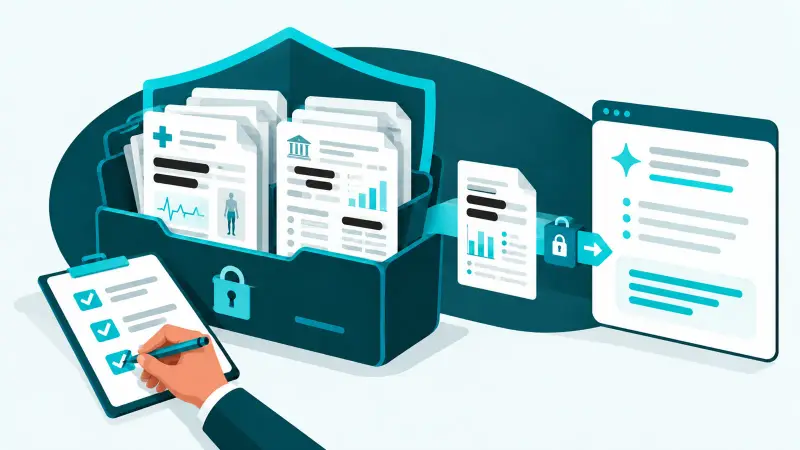
How healthcare and financial businesses can use AI tools under HIPAA and NYDFS Part 500: which plans offer a BAA, what the NYDFS AI letter expects, and the rules to set.

AI agents can send email, update records, and act for you. What to let them do, what needs human approval, and the security dealbreakers to check first.

A 12-question checklist for evaluating AI tools and vendors: data training, retention, access, certifications, compliance, and the red flags to walk away from.

Copilot can show anyone the files they already have access to. A readiness checklist for small businesses: find overshared data, label it, and pilot safely.
Next step
A short call is usually enough for us to understand the problem and tell you honestly how we'd handle it.
Start the Conversation