What we handle
- Wiring and infrastructure review
- Network closet and device planning
- Coordination for phones, cameras, and access points
- Documentation for future support
Start with the cables
Clean wiring and infrastructure planning for reliable devices, phones, cameras, and networks.
How we help
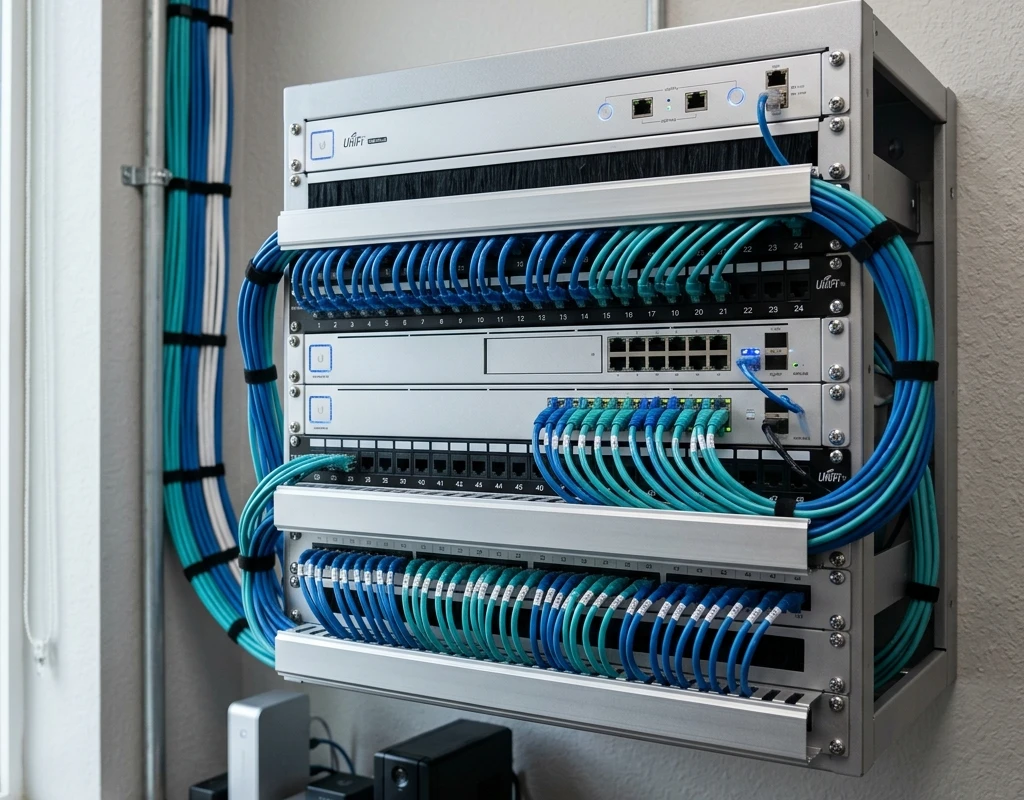
A lot of 'the internet is slow' tickets come down to a bad cable or a closet nobody has labeled. We clean up the wiring and network gear so problems are faster to find and fix.
What we handle
What you get
More detail
Reliable technology starts with the physical and network foundation. Messy wiring, unlabeled equipment, overloaded closets, weak access point planning, and undocumented cabling can turn simple support requests into long investigations.
We clean up and plan the cabling and network gear behind your computers, phones, cameras, Wi-Fi, and printers. Everything gets labeled and documented, so the next person who opens the closet knows what they're looking at.
We help identify messy layouts, unlabeled connections, aging equipment, and support issues that make troubleshooting harder than it needs to be.
Phones, cameras, access points, and workstations all depend on smart cabling and network planning. We help coordinate those needs before problems appear.
We document what's plugged into what, so the next repair or move takes an hour instead of a day.
When the network closet is a tangle of unlabeled cables, a ten-minute fix becomes an afternoon of tracing wires. Messy cabling, overloaded switches, and badly placed access points also cause a lot of the slow Wi-Fi and dropped connections that get blamed on the internet provider.
We review and plan the cabling and network gear behind your computers, phones, cameras, Wi-Fi, and printers. A tidy closet looks nice, but the real payoff is faster repairs and room to grow.
With structured cabling, every cable runs to a labeled port and is written down. You can tell what's connected where, add desks without guesswork, and fix problems faster.
We check old cabling, unlabeled connections, crowded closets, poorly placed access points, and aging equipment. Fixing the foundation tends to fix several other problems at the same time.
Phones, cameras, access points, workstations, and cloud systems all depend on the same underlying environment. A wiring or closet issue can show up as bad calls, unreliable cameras, slow Wi-Fi, or support delays.
Because we handle the cabling along with your IT, phones, and cameras, nobody can blame the cabling contractor. You also end up with documentation the next person can follow.
Our multifamily real estate case study shows how we consolidated wiring and technology across more than 100 properties.
Our approach
Review the physical technology layout.
Identify wiring, network, and documentation gaps.
Plan upgrades that support current and future needs.
FAQs
They include the planning, installation, cleanup, documentation, and support of physical network components such as cabling, switches, routers, access points, racks, and related equipment.
Upgrade timing depends on equipment age, business growth, performance issues, security needs, and new technology requirements. Regular assessments help identify when upgrades are worth prioritizing.
Structured cabling can simplify troubleshooting, improve reliability, support future devices, reduce clutter, and make network changes easier to manage.
Good infrastructure supports secure routing, network segmentation, controlled physical access, clearer documentation, and better visibility into connected devices.
Look for practical experience, clear documentation, knowledge of business networks, clean installation standards, and the ability to coordinate with IT, phone, camera, and internet providers.
Yes. A scalable wiring and network plan makes it easier to add users, devices, phones, cameras, access points, and new locations without rebuilding from scratch.
From the blog

Learn how structured business wiring improves network speed, Wi-Fi, VoIP, cameras, reliability, and future expansion across your office.

Learn how system integration connects business applications, reduces duplicate work, improves reporting, and creates a cleaner technology workflow.

Learn how to choose business security cameras based on coverage, image quality, storage, remote access, installation, and ongoing support.
Next step
A short call is usually enough for us to understand the problem and tell you honestly how we'd handle it.
Start the Conversation