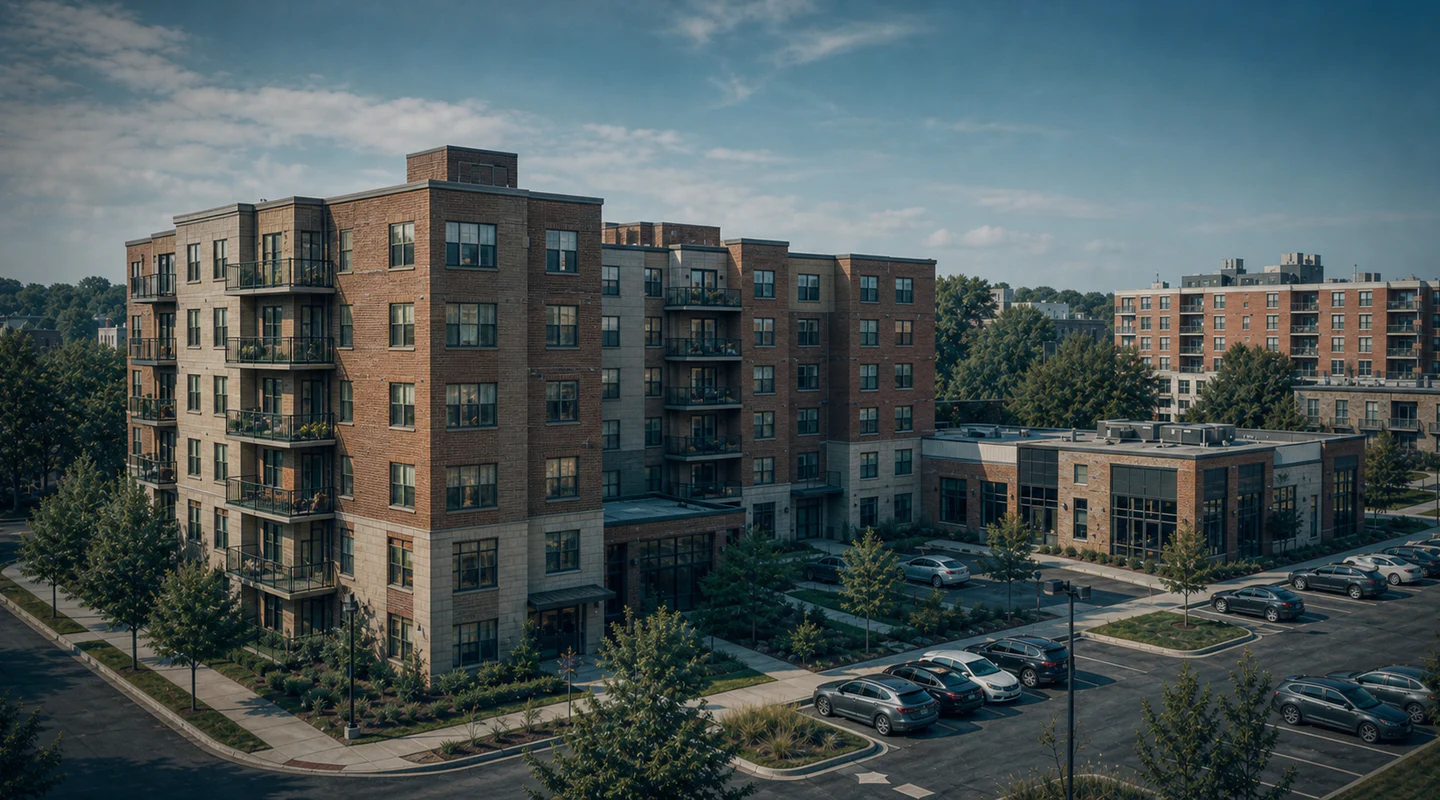
This real estate company manages more than 100 multifamily properties across multiple states. Thousands of tenants live in those properties, and more than 250 employees keep the operation moving.
From the main office, the company looked like one organization. At the property level, its technology looked like more than 100 separate ones.
Small offices at individual properties had local computers, internet connections, wiring, cameras, and other systems that had been installed at different times by different people. When something failed, finding someone local who understood the setup could become its own project. The main offices were responsible for the whole portfolio without having a consistent view of what was at each location.
The company needed central oversight and strong security, but it also needed someone who could handle the physical reality of technology spread across more than 100 properties.
A hundred small offices create one large problem
Distributed real estate has a particular kind of IT complexity. Most property offices are not large enough to have their own technology staff. They still need dependable internet, secure computers, working cameras, clean wiring, and access to company systems.
When every office develops separately, inconsistency builds quickly. One property may have a recent network while another is relying on equipment nobody has documented. Camera systems may use different platforms. Wiring may be labeled at one site and impossible to trace at the next. Employees may have different experiences with the same company systems depending on where they work.
None of those differences seems like a portfolio-wide problem when viewed one property at a time. Across 100+ locations, they become expensive, difficult to secure, and almost impossible for the main office to oversee.
Moving the company out of the server room
The company had been relying on internal servers. We moved the core environment to the cloud so employees could reach centrally managed systems without depending on equipment housed at one office.
The move reduced the number of critical systems tied to a physical location and gave the company a more consistent way to manage users, access, backup, and security. Employees across the portfolio could work from the same foundation, while the main offices gained a clearer view of the environment.
Cloud migration was only part of the work. Real estate operations still happen in buildings, and buildings still need networks, cameras, cabling, and hands-on support. A successful design had to connect the cloud environment to what was happening at every property.
Standards for every property
We consolidated the different setups into a managed approach with repeatable standards. Instead of treating each request as an unrelated local problem, we could look at it as part of the larger portfolio.
Wiring and network infrastructure could be planned and documented consistently. Security camera systems could be brought under clearer management. Office technology could follow the same security expectations regardless of the state or property. New work could be evaluated against an established model instead of starting from zero every time.
That consistency mattered to the employees in the property offices, but it mattered just as much to leadership. The main offices could set expectations for the entire organization and maintain oversight without having to personally track every router, cable, camera, and workstation.
Local needs with central accountability
A property manager should not have to become an IT project manager because a camera stops working or a new office needs wiring. At the same time, the main office cannot allow each property to choose systems without regard for security, compatibility, or long-term support.
We became the connection between those two needs. Property offices had a clear place to bring local technology problems. The corporate team retained oversight of standards, security, and priorities. Work could be coordinated locally while remaining visible and accountable centrally.
This model also improved support. A problem at a small office was no longer isolated from the rest of the company's technology picture. We could see how the location was configured, understand what standards applied, and bring in the right kind of help, whether the issue involved a user account, cloud access, a network, wiring, or cameras.
Security across the whole portfolio
With 250+ employees, small inconsistencies can become large security gaps. Every account, computer, office network, and remote connection is part of the same organization, even when the properties are hundreds of miles apart.
Central management allowed security and oversight to follow the company rather than the building. User access, cloud systems, backup, and support could be handled as parts of one environment. The main offices had greater visibility, and property employees had a consistent process for getting help.
The goal was not to make every property physically identical. Different buildings have different layouts and operational needs. The goal was to make the important parts consistent: ownership, security expectations, documentation, support, and visibility.
One company instead of 100 separate setups
The company still has more than 100 multifamily properties, thousands of tenants, and offices spread across multiple states. That geographic complexity did not disappear.
What changed was the way the technology was managed. The core systems moved from internal servers to the cloud. Local office technology, wiring, and cameras became part of a standardized operation. More than 250 employees could be supported through one structure, and the main offices gained the security and oversight they needed across the portfolio.
Why we tell this story
Real estate companies often grow one acquisition, property, or management office at a time. Technology follows that growth, but it does not automatically become one system just because the properties share an owner.
This company needed a partner that could work at both levels: cloud systems and cybersecurity at the center, plus the wiring, cameras, networks, and local support that keep individual properties operating.
If your corporate office is responsible for technology it cannot clearly see, a free IT assessment can map the environment, identify the inconsistencies, and turn scattered local setups into a plan the whole company can manage.