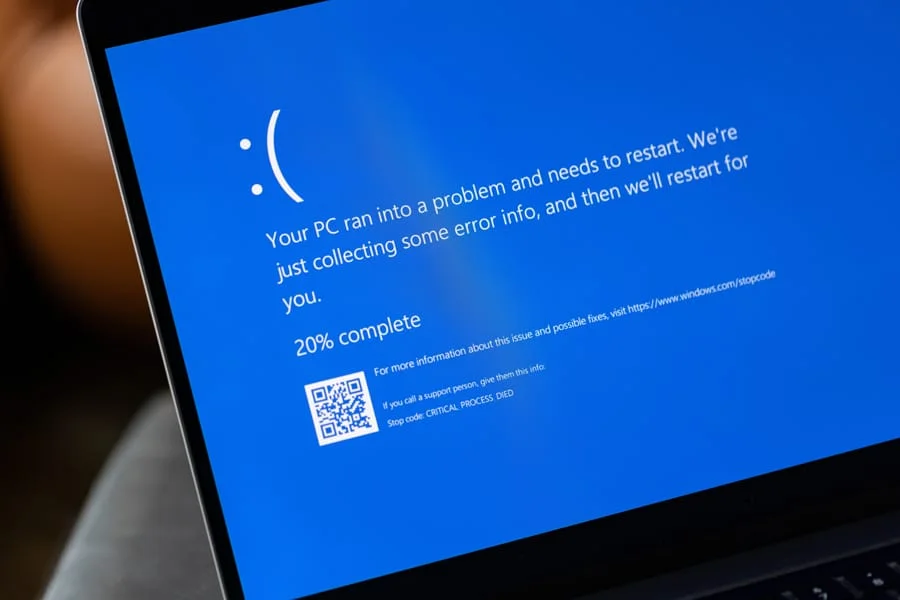
It was called the biggest global tech outage in history, and the bill was estimated in the billions of dollars.
In July 2024, a faulty update from CrowdStrike, one of the biggest names in cybersecurity, crashed Windows computers around the world. Airlines, hospitals, banks, and broadcasters went down within hours. The update was routine. The software was meant to protect those machines. That's what makes it such a useful lesson: a routine change from a trusted vendor can still take your business offline if nobody has planned for it.
So what did the outage cost, and what should a business owner take from it? Below is what happened, and what you can do before the next one.
What Went Wrong and How CrowdStrike Responded
Security researcher and cybercrime adviser Mikko Hypponen described it as "historic in scale". The problem was traced to CrowdStrike's Falcon sensor, the tool companies install on their computers to block attacks. A content update to the sensor caused Windows machines to crash and fail to restart. Organizations around the world, including Israel's Cyber Directorate, quickly pointed to the update as the cause of the disruption hitting airlines, companies, and governments.
CrowdStrike acknowledged the problem in a statement to customers, confirmed the crashes were linked to the Falcon sensor, and pointed people to its support portal for fixes. Meanwhile, businesses improvised. The UK's Sky News, which was knocked off the air, got back on using printed notes and its apps and website. The companies that recovered fastest were the ones that already had a plan for working without their normal systems.
The Economic Damage

The outage reached almost every industry. Broadcasters scrambled to stay on air. Airports and shipping hubs stopped moving. Check-in systems failed, flights were grounded, and some hospitals lost access to patient records and medication systems. The costs came in several forms:
- Lost Revenue Many businesses simply couldn't operate. The Baltic Hub, a major container terminal in Gdansk, Poland, had to halt operations, which held up shipping and logistics. Sky News lost air time, and with it, advertising revenue.
- Disrupted Travel and Trade Travel and transportation were hit hardest. Paris-Charles de Gaulle and Paris-Orly airports reported delays and temporarily suspended flights, stranding passengers and costing airlines and airports money.
- Repair and Recovery Costs Fixing the problem took a lot of manual work, since many machines had to be repaired one at a time. Businesses and government agencies paid for overtime and workarounds to get services back, and many now face the longer-term cost of reviewing their cybersecurity tools and infrastructure.
The common thread is that most organizations had no quick way to keep working when their computers wouldn't start.
What Downtime Actually Costs

- The Direct Hit Sky News kept broadcasting only by switching to printed notes and digital channels, which meant extra cost and a lot of stress. The Baltic Hub in Gdansk closed its gates and stopped work entirely. For a logistics business, there is no manual workaround for a system that runs the whole operation.
- The Longer Tail Downtime doesn't only cost what you lose that day. It hurts your reputation and can leave work backed up for days. Delays and flight suspensions at Paris-Charles de Gaulle and Paris-Orly affected thousands of travelers, and those people remember who left them stranded.
What It Means for Cybersecurity

The Falcon incident has made regulators and security vendors take another look at how updates are tested and released. Expect more scrutiny of how security companies push changes to critical systems, and possibly stricter testing requirements before updates go out.
For vendors like Microsoft and CrowdStrike, the lesson is to test updates more carefully and roll them out in stages, so a bad one hits a few machines instead of millions. For everyone else, the lesson is that even your security software is a dependency you have to plan around.
What Businesses Should Do Now
- Know What You Depend On Make a list of the software and services your business can't run without, including the security tools. For each one, ask what happens if it goes down for a day, and who you'd call. Better monitoring helps you spot problems early, but only if someone is watching it.
- Control How Updates Reach You Where your tools allow it, stagger updates so a handful of machines get them first. Keep a record of what changed and when, so you can find the cause quickly if something breaks. Your IT provider should be doing this for you.
- Have a Way to Keep Working Build a plan for keeping the business running when the computers don't. That means tested backups, a written recovery plan, and some idea of how to take orders, answer customers, and pay staff while systems are down.
The CrowdStrike outage showed how quickly one bad update can spread and how much it costs when it does. Most businesses can't prevent the next vendor mistake, but they can decide in advance how they'll respond to it. If you'd like help working out how your business would keep running through an outage like this one, talk to Spot On Tech.